As the festive season approaches, we all find ourselves eagerly waiting for celebrations, gifts and joy. Amidst all the excitement, let’s take a moment to reflect on the impact of our celebration on the environment. Embracing zero waste practices is a meaningful way to pay homage to the planet and the spirit of the festivities. Zero waste has become a super ubiquitous concept in current times and it is increasingly gaining traction.
As against this, it is super fascinating to see how Indian culture embodies zero waste principles. It is not just a modern concept that has come up in recent times, rather, it is a concept that has long been brewing in the fabric of our culture. It is deeply rooted in the Indian DNA through long term practices that are innately sustainable. From food practices to reusing containers to hand me downs, these customs offer lessons in reducing waste, while preserving resources.
To explain this better, let me take you through some everyday examples that showcase how deeply rooted we have always been in terms of being mindful of our consumption, embodying a zero waste lifestyle. This can be easily extended to festive celebrations too!
For starters, our culinary practices are designed to minimise food waste. Our food consumption patterns emphasises the usage of seasonal and local ingredients, which certainly ensures freshness of ingredients and reduces carbon footprint incurred on transportation. When it’s mango season, there’s a plethora of dishes using mango in its various forms incorporated into various food preparations. Raw mangos go into making pickles, curries and juices concentrates, while the fruit is consumed as a whole or in a curry too!

Indian cooking makes use of the entire ingredient from root to tip. Even ingredients that are commonly neglected such as vegetable peels, stems and seeds feature as hero ingredients in chutneys and condiments. This is also the outcome of severe famine in regions like West Bengal, which demanded the communities to utilise every little ingredient. Its roots in tragic times, this is a practice that still continues.
Not only are ingredients completely reused, but food leftovers are also transformed into new dishes. Every Indian mother has morphed last nights’ curry into cutlets or pizza toppings or chutneys.
Practices such as fermentation and preservation helps to extend the shelf life of ingredients, while enhancing the flavours too. A mango pickle is bound to be more finger licking delicious six months since it was first made. Pickling ingredients allows for one to consume ingredients, which you wouldn’t otherwise. By making lemons into pickles, we get to eat up the lemon zest directly, which is highly nutritious too!
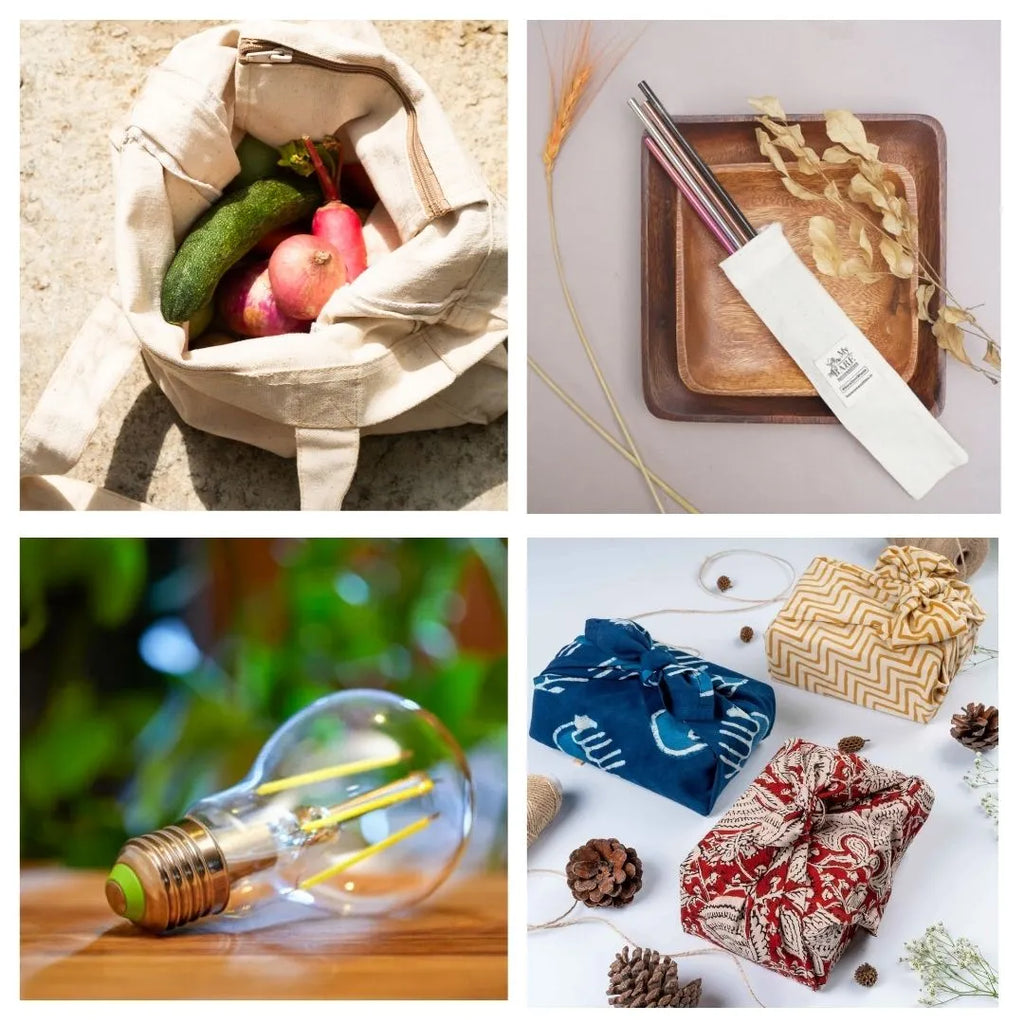
Sharing food with your extended community such as family, friends and neighbours is a common practice in Indian households. Especially during festive times, community sharing is a cultural practice that fosters a sense of camaraderie. Packaging the food in reusable containers, which can be returned, is a great way to reduce single use plastic packaging such as cellophane wrappers or aluminium foils. Plus there are so many biodegradable packaging available such as beeswax wraps, which can also double up as a nice gift.

Shifting gears from culinary practices to the cutlery used, reusing containers is a deeply ingrained practice in our communities. Metal and stainless steel boxes are passed on from one generation to the next. In many cases, names of the owners of the boxes were ingrained on it, giving the box an identity. Boxes are repeatedly put in cycle, thereby avoiding the need to purchase new boxes subsequently. You can also avoid single use plastic cutlery on your travels, by simply carrying along your own cutlery sets wherever you go! Having a plate, spoon, fork, tumbler, straw and bottle, can save tons of single use plastic cutlery units that would otherwise meaninglessly end up in landfills.
Many of these traditions have been passed on from one generation to the next. It not only helps preserve cultural heritage but also promotes sustainable practices. Keeping these traditional practices alive, we can certainly incorporate some modern elements to complement these age old practices.
Ensuring that we are segregating our waste and then composting it can enhance soil health and reduce landfill contributions. Furthermore, emphasising local, seasonal produce in tandem with traditional food practices can further minimise environmental impact.

Zero waste is seamlessly woven into the fabric of Indian culture. This festive season, let us collectively work together to embrace long standing customs. The answer for many of the modern waste issues that we are facing lies in our roots and we can cultivate those to respect our resources and tradition. By incorporating these into our festive days and the days going forth, we can build a more sustainable way of life.
Continue reading